Outline Itinerary :
DAY
1: ARRIVE LHASHA (3660M)
DAY 2: SIGHTSEEING IN LHASHA
DAY 3: SIGHTSEEING IN LHASHA
DAY 4: FREE DAY IN LHASA FOR ACCLIMATIZATION
DAY 5: DRIVE TO GYANTSE (3950M) / 261 KM
DAY 6: SIGHTSEEING & DRIVE TO SHIGATSE (3900M) / 90KM
DAY 7: SIGHTSEEING & DRIVE TO TINGRI / SHEGAR (4390M) / 304 KM
DAY 8: A DAY FOR REST AT TINGRI / SHEGAR (4390M)
DAY 9: TREK TO LUNG THANG (4510M) 4 HRS
TREKS
DAY 10: TREK TO LANGMA LA (5150M) 5 HRS TREKS
DAY 11: TREK TO ZOMMUG (5200M) 5 HRS TREKS
DAY 12: TREK TO RONGBUK (5000M) 3 HRS TREKS
DAY 13: TREK TO EVEREST BASE CAMP (5150M) 2 HRS. TREKS
DAY 14: DRIVE BASE CAMP TO KERUNG(2300M)/350KM
DAY 15: DRIVE FROM KERUNG (2300M) TO KATHMANDU / 145KM
PRICE INCLUDES
Land transportation by van or bus.
Accommodation on hotel/guest house on BB basis.
During trekking period – stay at tent (camping)
Sightseeing by experienced English speaking Tibetan
guide.
Monastery entrance fee as per itinerary.
All airport transfer
All equipment for camping with Tibetan staffs during
trekking.
Yak and yakman for transportation of luggage and
trekking equipment.
All freshly cooked meals during trekking (Breakfast,
Lunch, Dinner)
PRICE EXCLUDES
Lunch and dinner
Nepal re-entry visa fees
Airfare Lhasa-Kathmandu or vv / train ticket to
onward destination
Insurance of any kind
Expenses
of any personal nature
TIBET TOURIST VISA
-- A travel into the Tibet whether by a flight
or an overland journey both, requires a Chinese Visa
and a Tibet Travel Permit which can
both be acquired in Kathmandu with the help of a licensed
and authorized Travel Company ( Tibet
via Nepal ).
-- A valid “Visa to China” is not the
same as a “ Tibet Travel Permit”. As such, for those who already
have a “China Visa ” will also have
to apply for the “ Tibet Travel Permit”.
-- This “ Tibet Travel Permit ” is still required for any remote foreign
traveller who is already in China
and now willing to travel to Tibet
from any territory in China.
-- To obtain the “ Tibet Travel Permit ”
you have to book a guide for your whole trip and pre - organize
private transport for trips outside
Lhasa.
-- The trip outside Lhasa likewise requires extra permits which are arranged by
the Travel Agent you
are going with.
A TRAVELLER TO
TIBET MUST POSSESS AND
PRESENT THESE DOCUMENTS .
[ 1 ] Passport :: --
valid for 6 months.
[ 2 ] Chinese Visa : -- you can apply for one from a Chinese
Embassy or through China Highlights (who entry from China).
[ 3 ] Group Visa ::-- who entry from Nepal to Tibet after Tibet
tour traveller can visit China mainland with valid group visa.
[ 4 ] Individual Visa ::--
will be cancel when we apply for group visa (if visa is in the
passport).
[ 5 ] Tibet Entry Permit :: -- it is issued by the Tibet Tourism
Bureau and is an absolute necessity for outsiders entering Tibet.
[ 6 ] Specific Areas Permits :-- A few people who wish to travel to
specific areas in Tibet must also obtain :
Travel Permit -- It is required
when you are planning to movement to closed areas in Tibet. These are issued
after you land in Tibet.
Military Permit -- It is acquired to travel to some militarily
sensitive regions.
=========================================================================
SAFETY GUIDELINES
We recommend you
to go through our following safety guidelines and stay tune with latest
happening.
-- Have at least 2 copies of Tibet Permit with you while travelling there.
-- Keep your belongings properly.
-- When you feel uncomfortable due to altitude change or have any troubles,
report to your
guide promptly.
-- Never rush to visit attractions shortly after you arrive in Lhasa .
-- Shop around but avoid undue bargaining with street vendors and never buy
wildlife and
unknown Tibetan herbal medicine and
fake products.
-- Take your money and important
belongings with you all the time.
-- Spend few days in Lhasa for acclimation and always follow a gradual ascent
when travelling to
higher places to avoid attitude
sickness.
-- Refrain from heavy drinking and smoking.
-- Respect the religion, customs and avoid taboos in Tibet.
-- Pay special attention to unique alpine climate (such as sunburn, dramatic
temperature change, etc.)
-- Keep necessary medicines at the consult of your doctor.
-- Never travel alone at night or venture into unknown places without informing
your guide.
-- In most places, cash is only accepted. Do prepare enough and small change in
the local currency.
-- If an emergency arises, report it to
your guide promptly.
-- Don’t carry any documents or papers related to Dalai Lama or free Tibet movement.
-- We also recommend not carrying any
guide book to Tibet.
NEPAL TOURIST
VISA
-- The “Tribhuvan International Airport “ ( TIA ) is the only international
airport of Nepal from where the
Immigration Office grants the Tourist
Visa on Arrival for the tourists flying to Nepal .
-- Though you can expect some queues
during peak Tourist season, the “On Arrival ' visa procedure is
very quick and simple.
-- If you wish to skip those queues, you
can also consider getting Visa from Nepalese Diplomatic Missions
stationed abroad prior to your
arrival.
-- If you have obtained visa from
Nepalese Diplomatic Missions in abroad , then you must enter Nepal
within six months from the visa
issued date. Your total stay is counted starting from the day you enter
into Nepal.
-- Visas obtained on Arrival at the
Entry and Exit points are 'Tourist Visas'.
They bear multiple Re entry
facility. Tourist Visa 'On Arrival'
is the only entry visa to Nepal.
On Arrival Visa Fee at Entry Points
::
15 Days – 30 USD
30 Days – 50 USD
90 Days – 125 USD
NOTE :: Please carry the Cash ( US$ or Euro ) with you
. The electronic money is not accepted at all .
Gratis Visa On arrival ( Visa for Free ) ::
-- Children below 10 years except US
citizens
-- Up to 30 days for SAARC Citizen
(except Afghanistan) visiting Nepal for the first time in a given visa
Year.
-- Non Residential Nepalese(NRN) card
holder ( issued by MoFA /Nepalese diplomatic missions abroad).
-- Chinese Nationals
-- Officials from China, Brazil,
Russia and Thailand do not need Entry Visa based on reciprocal visa waiver
Agreement
Visa Extension Fee ::
-- Tourist visa extension is done for minimum 15 days with USD 45 and USD 3
per day for additional days.
In the case of delay less than 150
days additional USD 5 per day as late fine.
-- Contact Department of Immigration for extending your visa or changing the
category of your visa.
-- Tourist Visa extension can be done from Immigration Office, Pokhara too.
-- Non tourist visa extension can be done only at Department of Immigration (if
eligible) for a period of
maximum one year (except business
visa).
IMPORTANT NOTE ::-
-- If you are visiting Nepal for the
purposes other than Tourism (sightseeing, tour, travel, mountaineering,
trekking, visiting friends and families), you should still get ' Tourist Visa'
to get into the country. However, you must change the category of visa as per your purpose and length of stay
in Nepal from Department of Immigration by producing required documents.
-- Nationals of following countries are
requested to acquire Visa prior their arrival from their nearby Diplomatic
missions ( Embassies / consulates ) of
Nepal Government. (1) Nigeria , (2) Ghana ,
(3) Zimbabwe , (4) Swaziland,(5) Cameroon, (6) Somalia, (7) Liberia , (8) Ethiopia, (9) Iraq , (10) Palestine , (11) Afghanistan,
(12) Syria .
ALTITUDE
SICKNESS & REMEDY
-- Altitude sickness, the mildest form being acute mountain sickness (AMS), is
the negative health effect of high altitude, caused by rapid exposure to low
amounts of oxygen at high elevation.
-- Altitude sickness occurs when you
cannot get enough oxygen from the air at high altitudes.
-- Generally speaking, this brief
illness occurs when a person quickly travels from a place with a low elevation
to one with a high elevation - or vice versa.
-- The faster you climb to a high altitude, the more likely you will get acute
mountain sickness. The best way to prevent altitude illness is to ascend
gradually.
SYMPTOMS ::
-- This causes typical symptoms such as a headache, nausea, vomiting , light
headedness , loss of appetite, and trouble sleeping.
-- The different levels of altitude sickness have different symptoms : Symptoms of mild, short-term altitude
sickness also include dizziness, fatigue, shortness of breath, loss of
appetite, sleep problems and a general loss of energy.
-- This usually happens above 5,000 feet, though some might not experience
altitude sickness until at least 10,000 feet in elevation.
HOW LONG CAN ALTITUDE SICKNESS LAST ?
-- Other symptoms will go away quickly at a lower altitude. Symptoms of moderate
altitude sickness usually improve in 24 hours at an elevation that is at least
1,000 to 2,000 feet lower. Symptoms should go away completely within 3 days.
WHAT IS THE BEST REMEDY FOR ALTITUDE SICKNESS ?
Treating Altitude Sickness Instantly ::
-- Stop And Rest Where You Are.
-- Make Sure You're Drinking Enough
Water.
-- Then go down to the lower altitude zone as soon as possible.
-- If You Have A Headache, Take
Ibuprofen Or Paracetamol.
-- If You Feel Sick, Take An
Anti-Sickness Medicine, Such As Promethazine.
-- Do Not Smoke, Drink Alcohol, Or Exercise.
-- Do Not Go Any Higher For At Least 24 To 48 Hours.
-- Once you go down, and after the altitude sickness goes away, get some tea
and chocolate.
WHAT MEDICATIONS PREVENT ALTITUDE SICKNESS
?
-- Acetazolamide is used to prevent and reduce the symptoms of altitude
sickness. This medication can decrease headache, tiredness, nausea, dizziness,
and shortness of breath that can occur when you climb quickly to high altitudes
(generally above 10,000 feet / 3,048 meters).
HOW QUICKLY DOES DIAMOX WORK FOR ALTITUDE SICKNESS?
-- To prevent altitude sickness, start taking acetazolamide 1 to 2 days before
you start to climb. Continue taking it while you are climbing and for at least
48 hours after you have reached your final altitude. You may need to continue
taking this medication while staying at the high altitude to control your
symptoms.
HOW MANY DIAMOX CAN I TAKE A DAY ?
-- The recommended dosage is 1 capsule (500 mg) two times a day. Usually 1 capsule
is administered in the morning and 1 capsule in the evening. It may be
necessary to adjust the dose, but it has usually been found that dosage in
excess of 2 capsules (1 g) does not produce an increased effect.
WHO SHOULD NOT TAKE DIAMOX ?
-- You should not use Diamox if you have cirrhosis, severe liver or kidney
disease, an electrolyte imbalance, adrenal gland failure, or an allergy to
Diamox or sulfa drugs.
Trip
Introduction :-
A
unique trekking experience on the high altitudes of Tibet….
This is a trek you navigate in the ancient parts of
Tibet as old as the sun as you hike century’s old nomadic terrain, fortified
villages, lush alpine valleys, roving settlements, barley fields and a sequence
of glaciated mountain passes. The Southern part of Tibet reveals its craggy
beauty in all its glory as you proceed from Tingri to the Everest base Camp at
5200 meters…this is adventure in high wilderness country of Tibet. But before
you make a beeline into the Tibetan highlands, you will be professionally
guided to the superb historical sights around Lhasa, Gyantse and Shigatse.
A seemingly unlimited series of comfortable
ridge-top paths and alpine meadows takes us to Lamna La pass at 5,150 meters
overlooking marvelous landscapes. Yon can explore once in a blue moon-visited
areas amid glacier-carved geographic zones; and as you near Rongbuk at 5000
meters, the trek gets more adventurousentou with typical highland thrills.
Location of
Tibet :-
Nepal’s entire northern territory is Tibet – the autonomous region of
China. In other words - Tibet is situated towards the south-west of China. The
original 3 provinces of Tibet are (1) U - Tsang,
(2) Kham and ( 3 ) Amdo and the people living in these regions think about
themselves as the Tibetan.
Under China's occupation during in 1953, Tibet has been partitioned up, renamed
and joined into Chinese territories, with little reference to the original
borders between Tibet's areas. At the point when China refers to Tibet, it
implies the Tibet Autonomous Region or TAR, which incorporates just
U - Tsang and part of Kham.
The pristine snow capped view and inescapable Tibetan Buddhism environment and
simple access to its neighbouring nation Nepal make Tibet rank high of the
movement travel bucket list. Its unmistakable geography and land area enable it
to share the world's most amazing mountaineering and trekking assets with its
neighbour nation Nepal.
Time
Difference ::-
Tibet Standard Time ( IST ) is 0800
hours (6 hours) ahead of Greenwich Mean Time (GMT+8).
General Mode of Travelling to Tibet ::-
[ 1 ] By Road :
There are 5 main highways in Tibet, to be specific:
(
I ) Sichuan -Tibet Highway – it runs
between Chengdu, the capital city of Sichuan Province, and Lhasa.
( I I ) Qinghai - Tibet Highway – it runs between Xining, the capital city of
Qinghai, to Lhasa.
(I I I ) Yunnan - Tibet Highway – it runs between Yunnan territory and Tibet.
( I V ) Xinjiang - Tibet Highway – it
runs crosswise over boundless deserts, lofty and steep peaks.
( V ) The China - Nepal Highway – it is the main international highway in Tibet.
[ 2 ] By Air :
-- Flying to Lhasa dependably requires a stopover in either China or Nepal.
-- Lhasa Gonggar Airport is situated
around 98 kilometers (around 61 miles) toward the south of Lhasa City.
-- The main international trip to and from Tibet is between Lhasa and
Kathmandu, the capital of Nepal.
[ 3 ] By Rail :
The Gormo to Lhasa railway extends for 1,142 kilometers (710 miles) and serves
in as a connection between territory China and Tibet.
Weather In
Tibet ::-
-- The weather in Tibet is similar to that of Mainland China, though with lower
temperatures due to
higher altitudes. -- Lhasa is an
ideal destination because it is in a valley area of lower elevation.
-- Summers have warm days with strong
sunshine and cool nights, but summer days can even be
chilly at higher elevations. -- Winters are cold but there isn't all that
much snow. Lhasa enjoys much
sunshine even in winter.
Best Time To Travel ::-
-- Tibet's climate is ideal to
travel from April to the start of November, and most perfect in August
and September.
-- The months of May, June till
September are the primary tourist season to travel in Tibet.
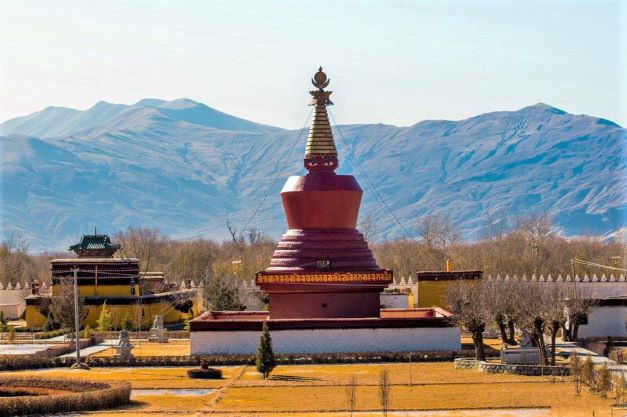
Trekking
15 Days
US$ 0000.00 ( mini. 02 Pax ) Per Person
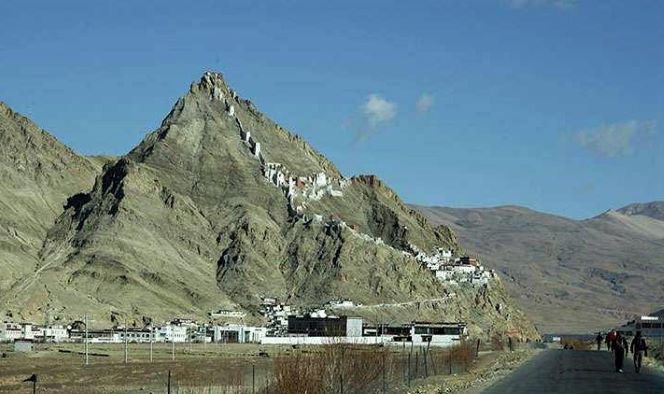
Trekking
12 Days
US$ 0000.00 ( mini. 02 Pax ) Per Person
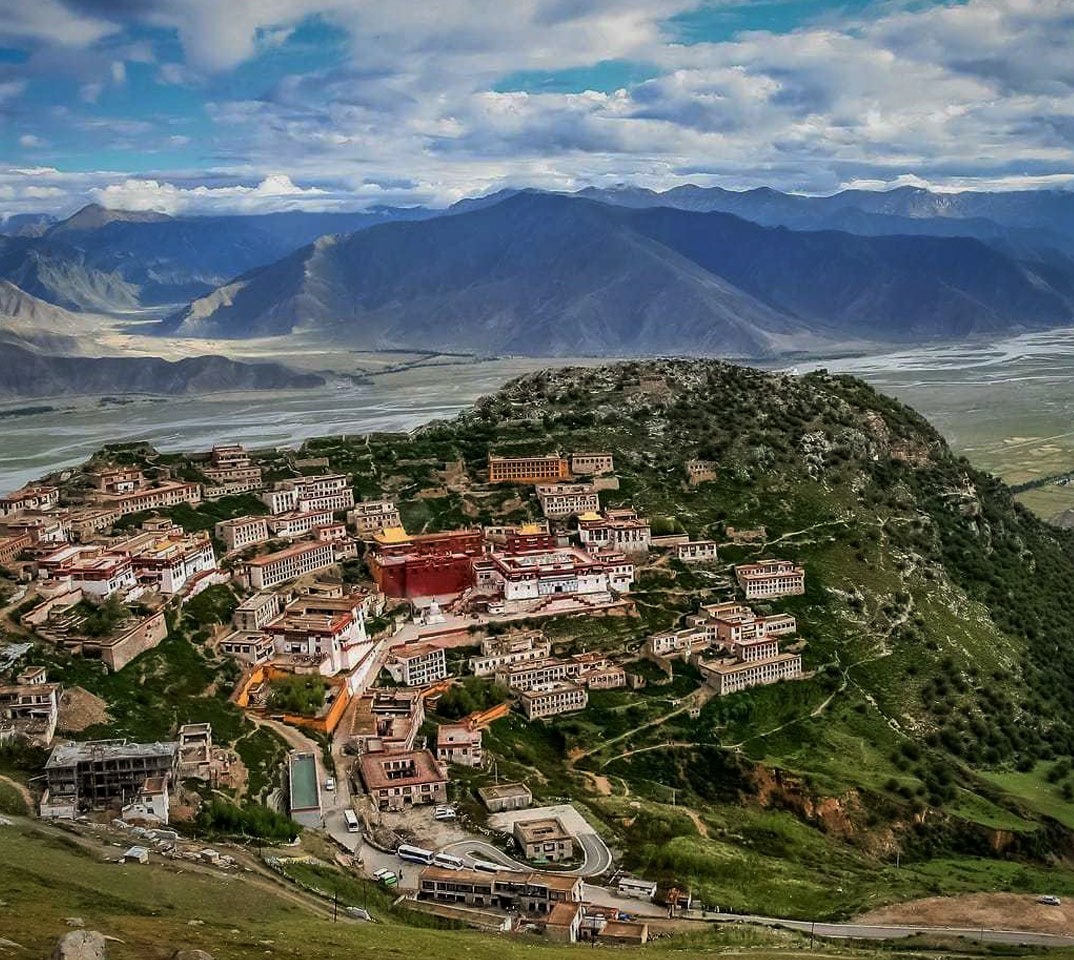
Trekking
19 Days
US$ 0000.00 ( mini. 02 Pax ) Per Person
Trekking
21 Days
US$ 0000.00 ( mini. 02 Pax ) Per Person